Social Fortress SEO Guide

A Proven System to Dominate Google Maps & Local Search

Social Fortress

Yes, a Social Fortress still matters in 2026, but not for the reason most people think. It will not magically push your site to the top of Google. What it does is strengthen your brand’s footprint across the web.

A Social Fortress is a network of branded social profiles built to support entity recognition, reinforce trust signals, and shape what appears when someone searches your name. Most experienced SEOs treat it as groundwork, not a shortcut. It lays the foundation so your other SEO efforts can work properly.

If you want to know when it actually makes sense, keep reading.

Social Fortress Essentials

  • A Social Fortress builds trust and brand consistency across 100+ platforms, helping search engines connect the dots around your entity.
  • It supports entity SEO and branded SERP control, but it rarely improves rankings on its own.
  • In 2026, it works best as a one-time setup, followed by focused authority building and quality backlinks.
Download for FREE

Social Fortress
SEO Guide

This page gives you the overview. The ebook gives you the execution.

Social Fortress SEO Mastering Guide

Table of Contents

What Is a Social Fortress in SEO?

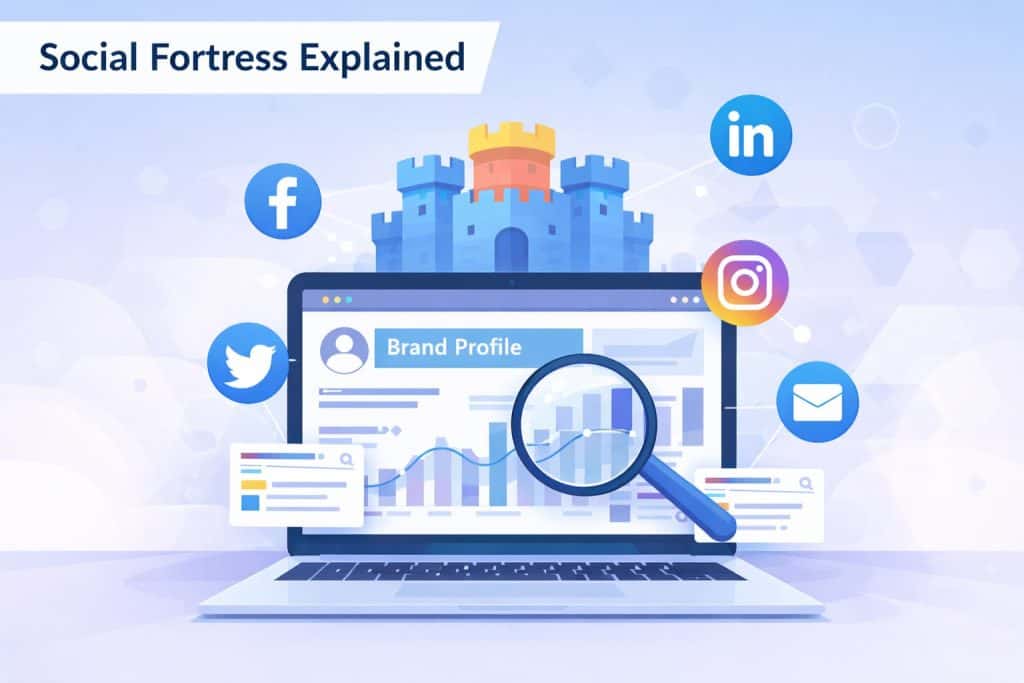
Social Fortress

A Social Fortress is a network of branded social media profiles built to link back to your website, strengthen entity signals, and support rankings through diversified backlinks and branded search control.

The concept gained more visibility in SEO communities after the mid‑2010s, especially in niche blogs and private groups discussing entity building and branded profiles. At its core, it looks a lot like citation building. The difference is that instead of listing your business in directories, you secure branded profiles across social platforms.

Some services make it possible to register usernames on well over 100 social platforms, helping you lock in consistent branding everywhere your name appears. That consistency matters because search engines compare details across sites to confirm ownership and legitimacy.

Google’s public guidance and patents show that consistent signals across multiple sites help its systems understand who owns a site and how a business entity should be identified, which strengthens entity recognition.

A typical Social Fortress includes:

  • Branded social media accounts across major platforms
  • Interlinked social sites through controlled link wrapping
  • Keyword-optimized descriptions
  • Clear website URL placement

Recent data shows that,

“large majority of U.S. adults use major social platforms, with YouTube and Facebook among the most widely adopted” – Pew Research Center

It shows how dominant social media is in everyday online behavior. When your brand lives there consistently, it sends clean signals.

A fortress is a foundation layer. Not a ranking trick.

Why Do SEOs Build a Social Fortress Before Real Link Building?

Many SEOs treat Social Fortress links as groundwork, similar to citations, creating baseline trust before pursuing outreach, digital PR, or higher-level links.

New site owners often ask how to get backlinks for a new blog. In many SEO communities and discussion spaces, common advice is to secure your branded profiles first, then move into guest posts or outreach.

You will see service provider selling large profile packages, often bundling dozens of social accounts into a single service. In practice, experienced SEOs know scale alone does not move rankings. The smarter approach is practical. Build the base once. Make it clean. Then shift focus to authority.

The reasoning is straightforward. A brand with no footprint online looks incomplete. A brand with consistent profiles across trusted domains looks real.

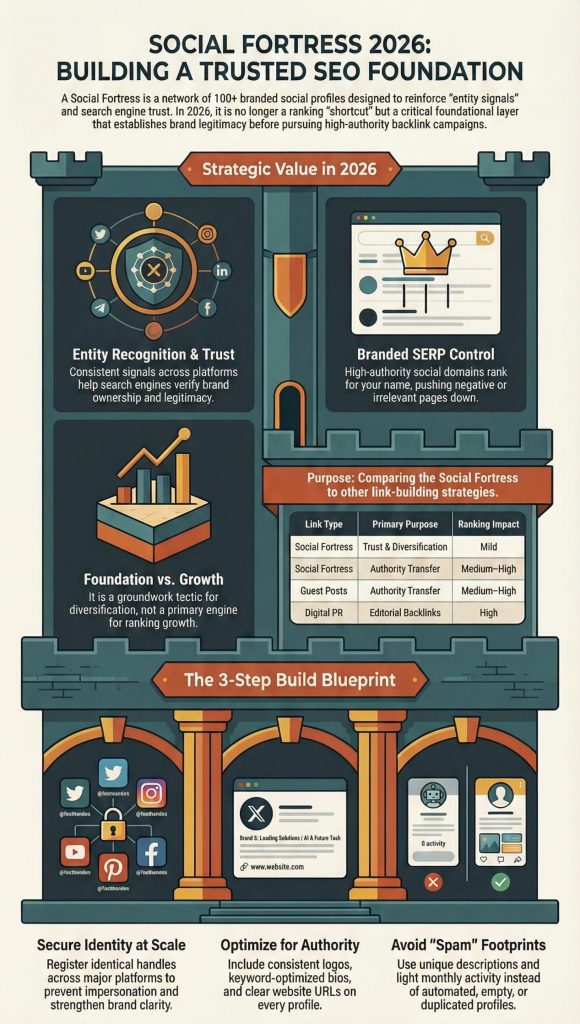
Here is how foundation links compare to growth links:

TypePurposeRisk LevelRanking Impact
Social FortressTrust + diversificationLow–ModerateMild
Guest PostsAuthority transferModerateMedium–High
Digital PREditorial linksLowHigh

A fortress will not drive waves of traffic. It gives your brand structure.

It is quiet work. But it matters.

How Does a Social Fortress Improve Brand Signals and SERP Control?

Social Fortress

Social profiles on high-authority domains can rank for branded searches, helping you shape what appears when someone looks up your name.

Platforms like Facebook, LinkedIn, and YouTube sit on domains that often rank easily for brand queries. When someone searches your brand, Google frequently shows:

  • Official website
  • Facebook page
  • LinkedIn profile
  • YouTube channel
 
That layered visibility builds familiarity and reinforces entity consistency.

This visibility also aligns with broader platform reach trends. Pew-based reporting notes that, cross adult audiences, highlighting how these domains maintain strong authority and discovery power in search ecosystems.

“YouTube and Facebook lead U.S. social media usage” – Search Engine Journal

A Social Fortress can help:

  • Push weaker or negative pages further down
  • Strengthen brand recognition
  • Support consistent entity signals
 
Some SEOs use light link wrapping, where profiles link to each other and to the main site. Done carefully, it reinforces structure without creating obvious link schemes.

The key is authenticity. Profiles should look active, complete, and real. If they feel automated or empty, the signal weakens.

A Social Fortress works best when it supports your brand, not when it tries to game the system.

When Does a Social Fortress Become Just Web 2.0 Spam?

A Social Fortress fails when profiles are thin, automated, duplicated, or built like a link wheel instead of real brand assets.
In many SEO forums, “fortress” sometimes just means mass-creating web 2.0 accounts. That approach usually backfires.

Common warning signs:

  • Boilerplate bios copied across platforms
  • Missing logo and header images
  • No profile photos or supporting visuals
  • Zero activity after the accounts are created

Discussions around link wheels are blunt. Most large-scale, automated link wheel setups are labeled black hat because the footprints are obvious.

A legitimate Social Fortress looks different. It focuses on:

  • Properly set up branded accounts
  • One consistent website URL
  • Unique descriptions for each platform
  • Light, ongoing activity

If the profiles look fake, they rarely rank for branded searches. And if they do not rank, they cannot protect or reinforce your brand.

How Do You Build a Social Fortress Step by Step?

Social Fortress Scaled

Build consistent branded accounts, optimize each profile, interlink them carefully, and keep them active over time.

Step 1: Secure usernames at scale

Register your brand name across major platforms. Keep the handle as close to identical as possible. This prevents impersonation and strengthens entity clarity.

Step 2: Optimize profiles properly

Each account should include:

  • Logo and header image
  • Website URL
  • Keyword-optimized description
  • Profile picture and supporting images

Add cross-links where they make sense. The goal is structured reinforcement, not an obvious loop.

Step 3: Interlink social sites carefully

Link wrapping can connect properties in a controlled way. Avoid mechanical patterns where every profile links to every other profile. Natural cross-references are safer and more durable.

Step 4: Maintain accounts

Log in monthly. Post small updates. Keep the accounts alive. Avoid automation tools that leave detectable patterns.

Pro tips

  • Store logins securely in a spreadsheet or password manager
  • Secure high-authority platforms first
  • Keep branding consistent across every profile

Maintenance decides long-term value. Abandoned profiles fade in visibility and authority.

Should You Buy Social Fortress Packages or Build Your Own?

Buying a package saves time. Building it yourself gives you control.

Many prebuilt Social Fortress–style packages fall in the $50 to $400+ range and typically cover around 50 to 100 accounts, with the exact platforms and volume varying by provider.

Here is a practical comparison:

FactorDIYPackage Service
ControlHighLimited
CostTime investment$50–$400+
Footprint RiskLowerDepends on provider
CustomizationFullOften template-based

Companies with strict brand and security standards often prefer manual builds. They want oversight. They want consistency. They want control over messaging.

For most site owners, the decision comes down to time versus precision. If branding matters to you long term, control usually wins.

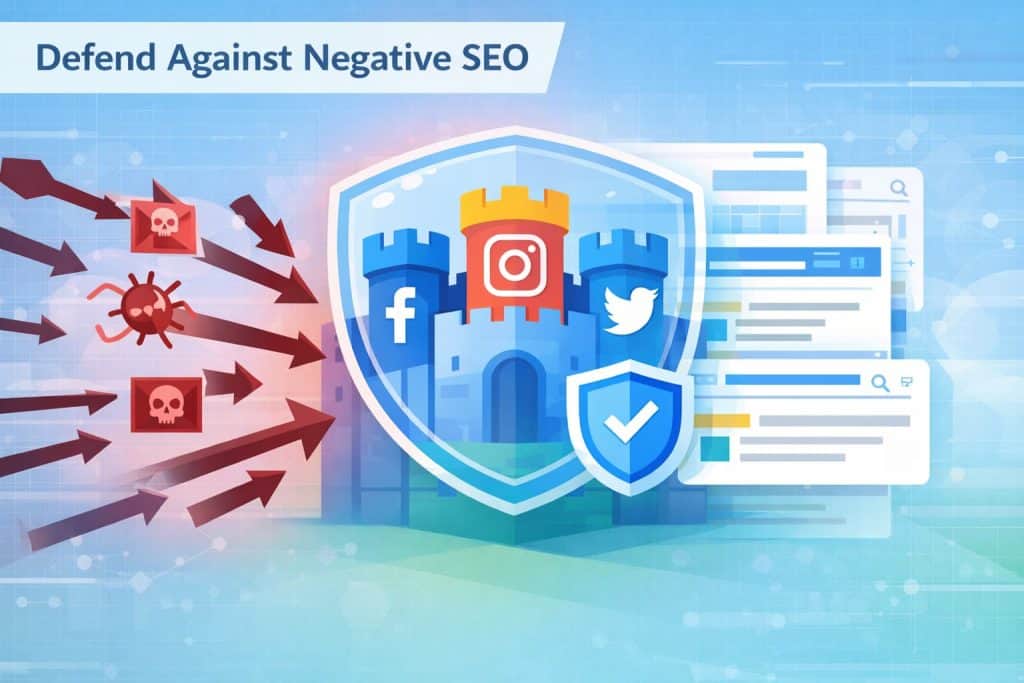
Can a Social Fortress Protect Against Negative SEO?

Social Fortress Defend Against Negative SEO

It can support reputation management by helping you control more of page one for your brand name.

Most branded clicks happen on the first page of Google. When your official social profiles rank alongside your website, they reinforce legitimacy and give searchers clear, trusted options.

A properly maintained fortress can:

  • Push hostile or low-quality pages further down
  • Reinforce official messaging
  • Strengthen perceived legitimacy
 

This only works if the profiles actually rank for your brand keywords and stay active. Empty accounts do not protect anything.

Think of it as reinforcement, not armor. It strengthens your presence. It does not make you untouchable.

Does Social Fortress Still Work in 2026?

Yes, but as a foundation, not a growth engine.

In 2026, a Social Fortress works best as an entity layer and brand signal system. On its own, it rarely moves rankings in competitive niches. Strong content, real authority links, and genuine audience engagement still drive meaningful growth.

Modern SEO leans heavily on editorial mentions, relationships, and earned media. Digital PR and well-researched content consistently outperform low-tier link tactics.

The practical approach is simple:

  • Build a Social Fortress once per site
  • Maintain it lightly
  • Shift focus to authority links and brand visibility

Large brands keep consistent social profiles for presence and control, not quick ranking gains. The same logic applies to smaller sites.

Identity still matters in search.

Build the foundation. Then build authority.

Strengthen your brand’s SEO foundation with a structured Social Fortress strategy today.

Download for FREE

Social Fortress
SEO Guide

This page gives you the overview. The ebook gives you the execution.

Social Fortress SEO Mastering Guide

Frequently Asked Questions

Local citations help search engines confirm business information across directories and websites. Consistent NAP data, clear business categories, and accurate listing details build trust over time. This trust supports stronger local search rankings, better visibility in local search results, and steady web traffic from nearby users who actively search for services in their area every day.

Structured citations appear in organized business directories with fixed fields for NAP data and categories. Unstructured citations appear in articles, newspaper sites, or community pages where business information is mentioned naturally. Both types support citation profiles, strengthen search engine rankings, and create backlink opportunities that guide local customers toward relevant nearby services during everyday searches.

Accurate NAP data keeps business listings consistent across local business directories, citation sites, and geographical platforms. Search engines compare this information to verify legitimacy and prevent confusion. When details match everywhere, businesses often gain ranking improvements, stronger placement in the map pack, and more clicks from mobile devices searching for nearby solutions during normal daily searches.

Start with accurate business information, then submit listings to trusted local citation sites and relevant business directories. Maintain consistent NAP data, choose correct business categories, and monitor citation status over time. Regular updates, manual submission checks, and simple competitor analysis help protect citation profiles and support stable local search engine rankings as local algorithm signals and search behavior change.

Citation profiles connect business listings, backlink opportunities, and consistent business information across digital channels. This network helps search engines understand location relevance, service focus, and credibility. Strong citation profiles can increase visibility in organic results, build customer trust, and generate steady web traffic that supports long-term local marketing performance in competitive nearby search environments.